

By Michael Konstantinopoulos, MEd (TESOL)
Director of Studies, ACCESS Learning Centre
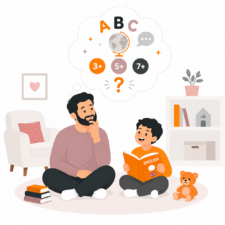
Many parents wonder whether their child should start English in the first, second or third year of primary school. The short answer is that there is no single “perfect” age for every child. Early exposure can be extremely positive, but starting earlier does not automatically mean progressing faster. A child’s maturity, the teaching approach and regular contact with English are equally important.
Early exposure and structured learning
Young children can become familiar with the sounds and rhythm of English through songs, stories, games and short activities, without pressure to write, study grammar or memorise vocabulary lists. This kind of exposure is valuable, but it is different from beginning a structured programme such as A Junior.
Research suggests that younger children rely more heavily on implicit, experience-based learning. Older children, however, have more developed literacy and learning skills and often make faster initial progress in a structured classroom. A child who begins slightly later has therefore not “missed the opportunity” to learn English successfully.
When is a child ready for A Junior?
Age is only one indicator. A child is usually ready when they can follow simple instructions, participate in age-appropriate activities and manage a short, regular study routine. Some confidence with reading and writing in their first language is also helpful, as learning a new alphabet is less likely to feel overwhelming.
For many children in Greece, this readiness develops during the second or third year of primary school. Some children may be ready earlier, while others benefit from waiting a little longer. The decision should not be based only on when friends or classmates have started.
Teaching quality matters more than starting age
At the first levels, lessons should be communicative, enjoyable and appropriate for the child’s stage of development. Listening, speaking, stories, games and visual materials should be combined with a gradual introduction to reading and writing. The objective is not to reach an examination certificate as quickly as possible. It is to build strong foundations, confidence and a positive relationship with English.
What should parents choose?
At ACCESS Learning Centre, we believe that playful and creative exposure to English is sufficient during a child’s first year of primary school. More structured and systematic language lessons are best introduced from the second year onwards, when most children have become more familiar with the routines and expectations of school.
For this reason, before recommending a class, we consider each child’s age, maturity, previous exposure to English and individual learning needs. The best starting point is not necessarily the earliest one, but the one that helps the child develop confidence and a genuine enjoyment of learning English.
___________________________________________________________________________________________________________
Selected sources and further reading:
Cambridge English. (n.d.). How children learn languages. Cambridge English
Comments are closed, but trackbacks and pingbacks are open.